Reasons to Move to Provence (As If You Need Convincing)
If you’re thinking about making the move to Provence, here are some reasons that might just tip the balance. I can’t promise it’ll be perfect — nowhere ever is — but I can promise you that once Provence gets under your skin, it never really leaves.
The Weather
Let’s start with the obvious. Provence enjoys around 300 days of sunshine a year — and somehow, it never gets old. Winters are crisp and bright, summers are long and lazy, and even when the mistral wind blows, the skies stay that deep, endless blue. You start to plan your life around light — morning coffees on terraces, evening walks in the gold of the setting sun.
The People
Provençaux have a quiet pride about where they live — and fair enough. They can seem reserved at first, but they’re genuinely warm once they know you’re not just passing through. Say Bonjour Madame or Bonjour Monsieur before you say anything else, ask questions and be curious and you’ll find yourself making friends in no time.
The Things to Do
There’s never a shortage of things to do in Provence — whether you’re here for a season or a lifetime. In summer, the region comes alive with festivals: the Festival d’Aix-en-Provence for opera and classical music, the Jazz à Juan festival on the Côte d’Azur, or the Avignon Festival, where the streets fill with performers and pop-up theatres.
If you love the outdoors, you can hike in the Luberon, kayak through the turquoise waters of the Gorges du Verdon, or take a boat trip from Cassis to explore the calanques — those dramatic limestone inlets that look like they belong in a painting.
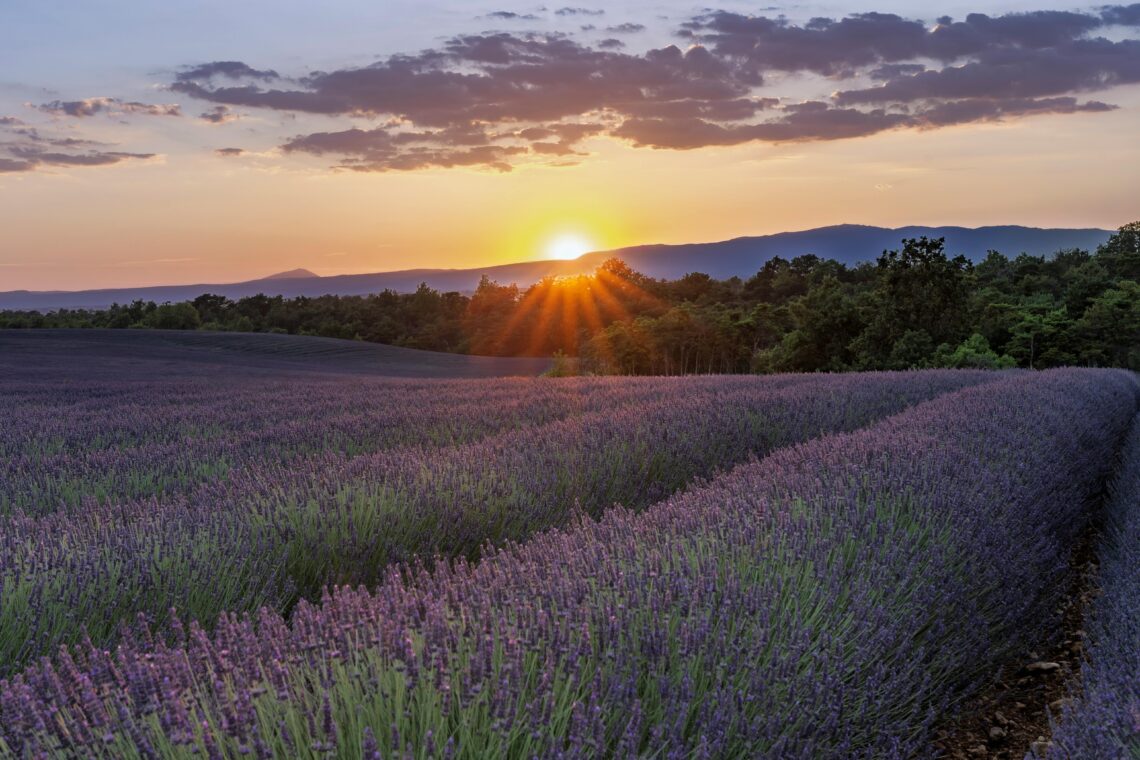
You can spend the morning in the mountains near Sisteron, have lunch by the lavender fields of Valensole, and end the day with your toes in the sand at Cassis or Saint-Cyr-sur-Mer. In winter, you can even ski in Pra-Loup or Val d’Allos, up in the Alpes-de-Haute-Provence — Proper snow and alpine air, just a few hours from the Mediterranean.
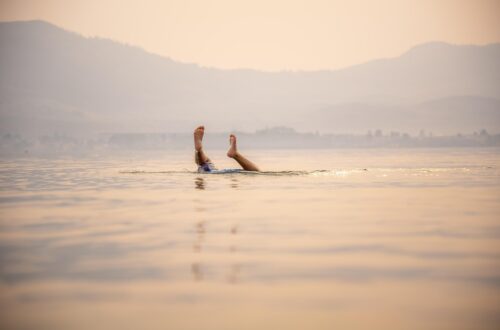
Some of my personal favourite things to do are paddle-boarding on the Lac de Sainte-Croix and wandering the ‘floating’ market in L’Isle-sur-la-Sorgue. And if all that sounds too energetic, there’s always sitting at a café, doing absolutely nothing — which, in Provence, is considered an art form.
The Food
The food here is the kind that makes you slow down without even trying. Fresh tomatoes that actually taste like tomatoes, flaky pissaladière, honey from local hives, rosé that somehow tastes better because the sun touched it first. Even the simplest meal — bread, cheese, a drizzle of olive oil — feels like an occasion.
The Lifestyle
Life in Provence runs on its own rhythm. Mornings are for markets, afternoons for naps or long lunches, evenings for friends and a glass of something cold. It’s not about doing less; it’s about doing things well. You start to measure time differently — not in hours, but in moments.
The Scenery
Everywhere you look feels like a painting. Golden fields, lavender rows, vineyards, olive trees, and that light — that famous Provençal light that has inspired painters for centuries. You’ll find yourself taking detours just because the road looks beautiful.
The Sense of History
From Roman ruins in Arles and Nîmes to cobbled medieval villages perched on cliffs, the region of Provence wears its history with effortless grace. You’ll find it in the stone under your feet, the fountains in every square, and the way locals tell stories about “the olden days.”
The Markets
Provençal markets are less about shopping and more about living. You’ll find farmers selling fruit they picked that morning, vendors calling out prices like poetry, and musicians playing in the background. The smells of lavender, garlic, and freshly baked bread mix into something unforgettable.
The Size (and Variety) of the Region
Provence isn’t just one place — it’s a whole world tucked into the south-east of France. It stretches from the Rhône River all the way to the Italian border and is made up of five departments: Les Alpes-de-Haute-Provence, Le Var, Les Bouches-du-Rhône, Le Vaucluse, and Les Alpes-Maritimes. Each one feels slightly different — from mountain villages and lavender plains to coastal towns that shimmer in the sun.
It’s also one of the oldest inhabited regions in France, with roots reaching all the way back to the Paleolithic period. You can feel that depth of history everywhere — in the stone walls, in the Roman ruins that seem to appear out of nowhere, in the way life here feels both ancient and effortlessly modern.
When it comes to cities, Aix-en-Provence, Avignon, and Arles each have their own rhythm, while smaller villages — Gordes, Roussillon, Lourmarin, Moustiers-Sainte-Marie — feel frozen in time.
The Feeling
It’s hard to explain, but once you’re here, you’ll understand. It’s that quiet moment when you’re sitting outside with a glass of rosé, the air smells of pine and thyme, and the cicadas start their evening song. It’s the feeling that, just for a second, everything is exactly as it should be.
Final Thought
Obviously, Provence isn’t perfect — nowhere is — but it’s generous. It gives back whatever you bring to it. Move here for the sunshine, stay for the lightness of spirit that seeps into your bones.
If you have found your way here, you are very welcome to follow along a little more closely –SUBSCRIBE -It’s FREE


You May Also Like
10 Cool Things to Do in Aix-en-Provence (By someone who lives there)
Cost of Living in Aix-en-Provence: The Real Costs